
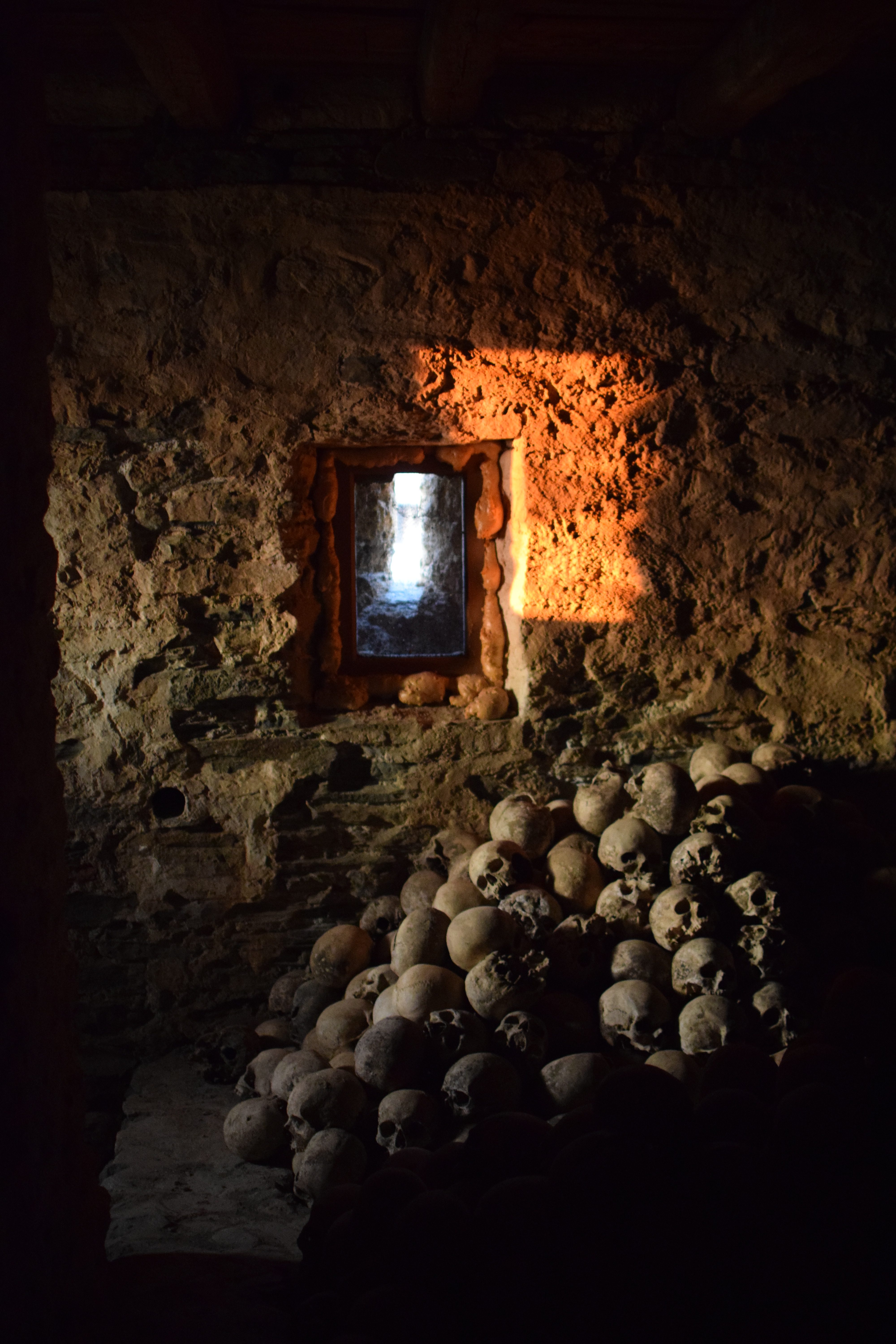
“Who will deliver me from this body of death?”
St Paul (Rom 7:24)
Preliminary Points
Contemporary man is obsessed with his body. This pertains not only to his own body, but to the bodies of others as well. We scrutinize each other’s body.
We’re into body-building and body-piercing. We tan our body and tattoo our body. We try to enhance our body through plastic surgery. We even surgically alter the gender of our body, in order to match our sexual orientation.
Much of this is a manifestation of our materialistic and carnal-minded culture. But if we look deeper, perhaps this reveals a fundamental flaw in how we see ourselves and how we see each other.
Upon closer observation, a tendency toward two extremes is apparent. On one hand, we take great effort to pamper and indulge our bodies. The advertising industry exploits and encourages sensuality. Seductive images of the human body are plastered throughout the Internet, in magazines and on gigantic billboards, enticing us with various products. There is an over-infatuation with the body. For many, the human body has become an idol.

On the other hand, our society openly disparages the human body. We discard the body through abortion, before it is born. And we dispose of the body through cremation once it dies.
We give little thought to the natural and organic relationship between our soul and body. For many people, the common belief is that a human being is basically composed of an immaterial soul (or ‘consciousness’) which is temporarily embedded in a material container, the body. According to this belief, this union is not permanent.
Some religions teach that our soul may be re-incarnated into another body. And when that body dies, our soul continues to be re-incarnated, until attaining the ultimate spiritual state—that of no longer having a body at all.
Other philosophies teach that our soul was never meant to inhabit a body in the first place. According to this teaching, our soul existed before the body—our soul ‘pre-existed’ in a bodiless state. For this school of thought, as a result of some primeval fall, our soul is now trapped within our body and longs to be released from its prison. Here again, the highest form of human existence is for the soul to be freed from the shackles of the body, so it may return to the bodiless state from which it originated.
The Orthodox Church teaches differently. Our soul is not meant to exist apart from our body, nor our body apart from the soul. There is an innate and everlasting unity between our soul and body. They will forever be united as one: “The soul possesses such a natural union of love with its particular body that it never wants to abandon it.”1 Our body and soul are intended to function together in a harmonious and reciprocal relationship as one.2
According to Orthodox teaching, both our body and soul together make up our human person: “Every body is connected with one soul, and every soul is connected with one body, and the two together constitute the particular [person], a definite man.”3 Our soul was not created to be separated from our body.
Sin and Death

There is one exception of course—during that un-natural and temporary tragedy of death. Death is one of life’s great mysteries. Our understanding of death reflects our understanding of life. How we see death impacts how we sees ourselves, the world around us, and God.
Death is a fact of life. Yet the way we die is not as important as the way we approach it: “Will the death we are facing be transformed into a gift, a source of life, or will it destroy us? This depends entirely on our attitude.”4
Death is the direct outcome of sin. And sin is willful self-separation from God: “But on as many as, according to their own choice, depart from God, He inflicts that separation from Himself which they have chosen of their own accord. But separation from God is death, and separation from light is darkness.”5 Sin is when we separate ourselves from God.6
In Orthodoxy, sin is not viewed in a legalistic sense, such as the breaking of a rule or regulation. Rather, sin is a spiritual sickness separating us from God, from each other and from our true selves.
Sin is when we abuse our God-given freedom. We sin when we make wrong choices that lead to our separation from God’s will and likeness. Sin prevents us from participating in divine life, leading ultimately to death: “For, behold, those who keep themselves far away from You shall perish.”7
Death, for the Orthodox Church, is not a punishment for sin. God did not create death. He does not want it. What God wants is our freedom, even if this means we might choose living for and loving ourselves more than Him. God respects our freedom so much that He even allows us to separate ourselves from Him. Death is not a punishment so much as it is a natural outcome of what happens when we sin, when we cut ourselves off from the Source of true Life—God.
The idea that death is a punishment from God for breaking His commandments is based on an inaccurate interpretation of Genesis 2. 16-17: “And the Lord God commanded the man, saying, ‘Of every tree of the garden you may freely eat; but of the tree of the knowledge of good and evil you shall not eat, for in the day that you eat of it you shall surely die’.”8
This does not say, ‘If you eat of this particular tree, I will punish you with death’. Rather, from an Orthodox perspective, when God forewarned Adam, ‘For in the day that you eat of it you shall surely die’, He was clearly cautioning him and that if he ate from this specific tree, he would be separating himself from the true life that God had given him.9
Our separation from God results in the rampant sickness and suffering engulfing the world since the Fall of Adam. Far from what was originally intended by our Creator, the world is now bound by disease, dysfunction, destruction and death. This is not the world as originally created by God.
Our misuse of our God-given freedom and our ensuing separation from God have led to dire consequences for the entire creation. Even though we are created in the image of God, in a world originally created good and beautiful, we are, in fact, born into a ‘death-bound’ universe: “All people taste the terrible mystery of death, since we all inherit corruptibility and mortality. In other words, we are born to die. Death is the surest, most certain event in our life.”10
In many ways, however, we would rather forget death exists. Most of us try our best to avoid growing old. We try to look as young as possible, at all costs. We lose sight of the fact that we have fallen from our original glory. This way of life—indeed this way of death—is not what God intends. Our separation from God results in death, engulfing the world since Adam’s Fall.
In fact, there are two kinds of death: 1) physical death—the separation of our soul from our body; and 2) spiritual death—the separation of our soul from God’s grace.11
St. Gregory Palamas teaches, “Physical death is when the soul leaves the body and is separated from it. The death of the soul is when God leaves the soul and is separated from it … Once separated from God it becomes more ugly and useless than a dead body, but unlike such a body it does not disintegrate after death …”12
In spite of death, life is still good. Because of God’s great benevolence, life on earth is indeed beautiful. Life is so beautiful that at times we consider our sinful condition, and even death itself, as ‘natural’ to us—he ‘died of natural causes’.
The truth is sin and death are not natural to us. Our willful separation from God’s grace and the consequent separation of our soul from our body are indeed un-natural. Sin, sickness, senility; old age, death, and bodily corruption—all these are in fact alien to our nature as human beings. God did not create us to suffer these things. These are all consequences of separating ourselves from God—in Whose image and likeness we are originally created: “I weep and I wail when I think upon death, and behold our beauty, fashioned after the image of God, lying in the tomb disfigured, dishonored, bereft of form.”13
Garments of Skin
Holy Scripture describes man’s fallen condition with the phrase ‘garments of skin’: “For Adam and his wife the Lord God made garments of skin, and clothed them.”14 ‘Garments of skin’ refers to our fallen, mortal state in which we now live, and will one day die.
Garments of skin are not equated with the human body per se, at least not as originally created by God. Rather, these ‘garments’ represent fallen man’s new mortality which resulted when Adam chose to separate himself from God: “The central content of the ‘garments of skin’ is mortality, the transformation of life into survival. … [God] tolerates within His infinite love even this new situation and transforms it into a blessing. … so that by using it correctly humanity can survive and realize its original goal in Christ.”15
Prior to these garments of skin, pre-fallen Adam in Paradise was naked by virtue of his simplicity.16 In other words, before the Fall, Adam lived in natural harmony with the world around him: “The body of Adam was so simple that it was in reality transparent, open to the material creation without resisting it in any way …”17
When he fell, Adam broke his original relationship with God and the world. Our soul is now preoccupied—often obsessed—with passions of the flesh, worldly pleasures and material possessions. ‘Garments of skin’ conveys the reality that fallen man is now bound by a biological mode of existence. Man must now toil and sweat to sustain himself. He must protect himself against the elements—even from the animals originally created for him: “Man no longer has life in the way that he did previously … Life continues only so long as death is postponed. That which exists now in the proper sense is death: ‘life’ has been transmuted into ‘survival’.”18
Bodily Death as a Benevolence of God
The Church Fathers teach that these ‘garments of skin’ reveal God’s goodness and compassion for man. In light of God’s great love and mercy, death is considered as a remedy for sin, not as punishment. The inevitability of death can lead man to repentance and the struggle against sin.
According to St Basil the Great, “God did not create death, but we brought it upon ourselves by a wicked intention. … He did not prevent our dissolution … that our weakness might not remain as immortal.”19 St. Gregory the Theologian adds, “Yet here too [man] makes a gain, namely death and the cutting off of sin, in order that evil may not be immortal. Thus, his punishment is changed into a mercy …”20 By tolerating death, God providentially limits the extent of man’s sin and separation from Him.
Our mortality not only limits the extent of our sin, it also frees us from our personal sicknesses and sorrows. St. Cyril of Alexandria teaches: “By death the Giver of the Law stopped the spread of sin, and even in this He reveals His love for mankind. For death dissolves this animal nature of ours and stops the activity of evil, and on the other hand, it delivers or frees man from illnesses, frees him from labors, and puts an end to his sorrows and cares, and stops his bodily sufferings.”21
In light of the Resurrected Christ, then, it is better for us to grow old and eventually die. This is to say, it is better that our soul be temporarily separated from our body, rather than allow our unnatural separation from God to last forever: “By allowing man to dress himself in biological life … [God] redirected death … and thus by death is put to death not man but the corruption which clothes him. Death destroys this prison of life-in-corruption, and man … is liberated through death.”22
God provides us with opportunities to freely repent from sin and strive for true life in Christ, for which we are intended: “So here we see God’s love for mankind. He expels man from Paradise so that he will not remain mortal forever, but may repent and at the suitable time, through the Incarnation, may … overcome death … So then, man’s expulsion from Paradise was not a punishment by God, but an act of His love and philanthropy.”23
Christ liberates human nature from the bonds of sin and death through His death and Resurrection. Furthermore, Christ empowers us, as living members of His Resurrected Body, with the means to defeat the forces of spiritual death, here and now.
Through our personal participation in the ascetic, sacramental and liturgical life of Christ’s Holy Church, we are led to spiritual therapy. Here, our spiritual illnesses are properly treated and healed. Death is a transient phenomenon. It is a momentary interim. When looking at death through the lens of Christ’s Resurrection, we see it in an entirely different perspective.
Resurrection
Belief in the resurrection of the human body is fundamental to the Orthodox Faith. It is a matter of faith alone. For many outside the Church, belief in the Resurrection appears irrational. So is our belief that God actually became man, or that bread and wine become the Body and Blood of Christ.
Our Church teaches that every human being who ever lived will be resurrected on the Last Day.24 Each one of us, whether a believer in the Resurrection or not, will be resurrected to his own body—whether he is Christian or atheist, Buddhist or Hindu, sinner or saint.25 And we will be judged in our body, for how we lived and for what we did in these bodies while here on earth.
The Apostle Paul teaches that Christ, “will transform our lowly body that it may be conformed to His glorious body.”26 Our resurrected body will be our same body, but it will be glorified. It will be a spiritual body.27 St. John Chrysostom writes, “It is the same, and not the same; the same, because the substance [οὐσία] is the same; but not the same, because this is more excellent, the substance [οὐσία] remaining the same but its beauty becoming greater, and the same body rising up new.”28
St. Gregory Palamas teaches further, “When those who have lived here in a godly manner are separated from their bodies, they are not separated from God, and in the resurrection they will take their bodies with them to God, and in their bodies they will enter with inexpressible joy there where Jesus has preceded us, and in their bodies they will enjoy the glory that will be revealed in Christ.”29 He continues, “But this does not apply to those who live this present life in an unregenerate manner and who at death have no communion with God. For though all will be resurrected, yet the resurrection of each individual will be in accordance with his own inner state.”30
Non-believers will also be resurrected, but their bodies will not be glorified. The bodies of the faithful, however, will be glorified according to the condition of their souls.31
The deep respect and reverence the Orthodox Church has for the human body is based ultimately on the Incarnation of Christ. Not only are we uniquely created in the image of God,32 but the Son of God has now assumed our human nature, with a real human body. He did not assume the nature of an angel, nor of any other created being. God became human.
And not only is the fullness of our nature—including our body—assumed by the Son of God, but it was also resurrected by Him after His voluntary death on the Holy Cross. Furthermore, forty days after His Resurrection, at His glorious Ascension,33 Christ took His body with Him, so that His complete human nature—including His human body—now sits “at the right hand of the Father.”34 Christ will never cease being human.35
This is the same Body that the faithful are engrafted into through Holy Baptism: “For we are members of His body, of His flesh and His bones.”36 This is the same Body believers partake in when receiving Holy Communion: “The bread which we break, is it not the communion of the body of Christ?”37
We become the Body of Christ—not because we lose our own bodies—but because we conform to the likeness of Christ.38 Our bodies are intended to become holy.39 Together as one, our body and soul are saved and sanctified. Together as one, our body and soul will be resurrected into eternal life.
The Inherent Unity of Our Body and Soul
Man has a unique position in God’s creation. Of all God’s creatures, only man is both spiritual and physical. Man is spiritual by nature of his soul, as well as physical by nature of his body. Like the holy angels, there is an obvious spiritual aspect to human existence. And like other creatures of the material world, we too have a physical body. Man alone, within the entire universe, was created with both a spiritual soul and a material body.
An organic inter-connection exists between our soul and body. The afflictions of our soul affect our body.40 Likewise, bodily afflictions affect our soul. They can break our spirit if we let them, leading to despondency, depression and despair. On the other hand, bodily afflictions can provide opportunities for spiritual growth and the purification of our soul.
The condition of our body affects the condition of our soul, and vice versa: “Some passions enter the body by way of the soul, and some work in the opposite way,”41 states St. John Climacus. A healthy soul also affects one’s body in a positive way: “It is possible for one to always have the flame of divine love in his heart. I constantly had that heavenly sweetness. My whole body was burning and my bones were like flaming candles.”42
Participation in God’s grace is not limited to one’s heart and soul. Divine grace affects the entire man, including the physical body: “The heart directs and governs all the other organs of the body. And when grace pastures the heart, it rules over all the members … This is how grace penetrates throughout all parts of the body.”43
Our Body Participates in Prayer
The whole man, both body and soul, is created for holiness. Furthermore, our entire person—body and soul—participates in prayer.
Indeed, our body is created for prayer. We pray bowing our heads and bending our knees; by prostrating and crossing ourselves. We pray kneeling and standing; by kissing icons and lighting candles. We read and chant our prayers.
Prostrations are an excellent illustration of how the body participates in prayer. St. Porphyrios of Kafsokalyvia explains the vital role of prostrations: “When prostrations are made for Christ, grace works directly on the soul … We acknowledge our lowliness and display our respect in a tangible way. With prostrations the Christian is humbled, and this helps for the grace of God to come upon him. … Prostrations are a sacrifice and offering—an offering of love and worship. And the whole person participates in this worship, both body and soul.”44
Regarding the practice of kneeling, St. Isaac the Syrian writes, “Whenever you find it delightful to kneel in prayer, do not be carried off by the thought to put an end to it. Would that this were never cut short for as long as you are in this life!”45
Our body not only participates in prayer—it enriches our prayers. Our prayers are more effective when accompanied with ascetic self-denial and sacrifice: “One should not seek his own ease, his convenience. Self-denial is needed first … for when self-renunciation exists, then God gives one His Grace. … The help one receives from God is analogous to the sacrifice and prayer he does for his fellow human beings.”46
Our body plays a fundamental role within our spiritual lives. What we do to our body and what we do with our body—what we put on it and in it—directly affects our spiritual health. This pertains not only to positive practices such as fasting, prostrations and the purification of our passions, but also in a negative way. For instance, gluttony, drunkenness, fornication and other illicit sexual acts adversely affect our spiritual lives. They repel divine grace and impede our pursuit of prayer.
The Sanctification of the Human Body
The sanctification of the human body results from the sanctification of our soul.47 When our soul is sanctified, it directly affects our body: “In the spiritual man, the grace of the Spirit, transmitted to the body through the soul, grants to the body also the experience of things divine, and allows it the same blessed experiences as the soul undergoes.”48
The word ‘to sanctify’ (ἁγιάζω) is referred to throughout the sacramental and liturgical life of the Orthodox Church. The term may appear on its own or with specific reference to either the soul or body. At other times, it refers directly to both soul and body. Its use is so widespread, only a few examples are cited here.
To begin with, the Apostle Paul writes to the Thessalonians, “Now may the God of peace Himself sanctify (ἁγιάσαι) you completely.”49 And also to the Corinthians, “But you were washed, but you were sanctified (ἡγιάσθητε), but you were justified in the name of the Lord Jesus …”50 This same phrase is referred to in the Mystery of Holy Chrismation, “Thou art justified. Thou art illumined. Thou art sanctified.”51
In the Divine Liturgy, ‘sanctify’ (ἁγιάζω) or ‘sanctification’ (ἁγιασμός) is referred to from beginning to end. During the Service of Preparation or Proskomide, after the priest has veiled and censed the Gifts, he prays that Christ, “… be our Savior and Redeemer … blessing and sanctifying (ἁγιάζοντα) us.”52 And at the Prayer of Thanksgiving, “For Thou art our sanctification (ἁγιασμός) …”53 Also at the conclusion of the Liturgy, the priest prays, “O Lord, Who blesses them that bless Thee, and sanctifies (ἁγιάζων) them that put their trust in Thee … sanctify (ἁγίασον) them that love the beauty of Thy house.”54
Elsewhere in our liturgical life, the term ‘sanctify’ refers directly to both soul and body. During the Mystery of Holy Unction, we chant, “O Christ Who … hast sanctified (ἁγιάσας) both our souls and bodies from on high …”55
In the Liturgy of the Presanctified Gifts, at the Litany Before the Lord’s Prayer, the priest prays quietly, “Sanctify (ἁγίασον) all our souls and bodies with the sanctification (ἁγιασμῷ) which cannot be taken away …”56
In the Prayers Before Holy Communion, at the Second Prayer, we pray, “Let these holy Gifts be unto my healing, and purification … and sanctification (ἁγιασμόν) of both soul and body …”57 At the Third Prayer, “Let the live coal of Thine all-holy Body and Thy precious Blood be unto sanctification (ἁγιασμόν) and enlightenment and strengthening of my humble soul and body … O Master, sanctify (ἁγίασον) my soul and body, my mind and heart …”58 And at the Fifth Prayer, we pray that our participation in Holy Communion be unto our “… sanctification (ἁγιασμόν) and enlightenment … and health of both soul and body …”59
Not only before Holy Communion, but also afterwards, at the Prayers of Thanksgiving, we pray that “… these Thy dread and life-creating Mysteries [be] for the benefit and sanctification of our souls and bodies …”60
From these few liturgical texts, we see our body’s potential for sanctification in Christ. And holy relics are the clearest manifestation of how the human body can indeed be sanctified by divine grace.
Holy Relics
Since the time of the first persecutions, Christians honored relics of holy martyrs. For this reason, pagan persecutors often disposed the bodies of martyrs by throwing them into the sea, so their relics would not fall into the hands of Christians who would honor and venerate them.61 In many cases relics became, by God’s grace, sources of countless miracles and healings.
Once the early persecutions ended, Christians continued gathering and preserving the relics of their saints. This gave rise to the practice of exhumation, or reverent removal of relics from graves. These relics were then solemnly placed within altars of local churches, often built in their honor.
As early as the fourth century, at the consecration of a church, the practice of placing relics within the holy altar became widespread. It was formally approved and mandated in 787 by the seventh canon of the Seventh Ecumenical Council.62 This practice was based on the ancient Christian custom of celebrating the Holy Eucharist directly over tombs of the martyrs, stemming from the first centuries of the Church.63
This practice is continued today. At the Service for the Consecration of an Orthodox Church, the local bishop seals relics within the holy altar, so that the Holy Eucharist is still celebrated over the relics of martyrs and saints, even today.64
Holy relics play a fundamental role within the life of the Orthodox Church. Interestingly, several early heretical groups disapproved of their veneration,65 as do the majority of contemporary Protestant confessions.
Today, throughout the Orthodox world, many holy relics are known as sources for healing, exorcisms, and other miracles: “The presence of the grace of God in the holy relics is shown in a variety of ways. Sometimes it is by their incorruption, sometimes by their fragrance, sometimes by miracles, and so forth, and it is perceived by those who have faith and pure spiritual senses.”66
Countless instances are found throughout the Lives of Saints. St. Haralambos († circa 194-211) is one example: “The skull of St. Haralambos is kept at the Monastery of St. Stephen at Meteroa. The fragments of his holy relics, which are to be found in many places in Greece and elsewhere, accomplish frequent miracles and have made St. Haralambos … especially dear to the people of Greece.”67
Relics are often known to emit fragrant myrrh. A notable example is St. Demetrius the Myrrh-gusher (†306) the patron Saint of Thessalonica. His holy relics still emit fragrant myrrh today: “It was God’s will that the grace with which He filled Saint Demetrius should remain active even after his death. This is why He caused to flow from his body a myron [fragrant myrrh] with a delightful scent, which had the property of healing all who took it as an unction, with faith in the intercession of the Saint.”68
Other saints are known for emitting myrrh at the moment of their death. Examples include St. Theodora of Thessalonica (†892): “When she fell asleep in peace in 892, in the presence of the whole community [of nuns] her aged and wrinkled face was suddenly irradiated with the bloom of youth, filling the room with heavenly fragrance.”69
Also St. Luke the New Martyr (†1802): For three days as his body hung from the gallows, “no insects dared to approach him and, moreover, a lovely fragrance was released around him, witnessing to the favor that he had found with God.”70
In many instances, bodies of saints remain entirely incorrupt. In other words, their bodies have not decomposed. Their skin still remains even hundreds of years after their deaths. A few examples include Sts. Spyridon, Gerasimos and Dionysios.
St. Spyridon of Corfu (†348): “His body became an inexhaustible source of miracles and healings for the faithful … [It] was taken secretly to Corfu (1456) where it has been kept ever since, miraculously incorrupt. So many miracles have been wrought through it for particular persons as well as for the population as a whole—deliverances from cholera epidemics and foreign invasion—that St. Spyridon is venerated as the principle protector of Corfu.”71
St. Gerasimos of Kephalonia (†1579): “Until the present day, the body of St. Gerasimos remains complete and incorrupt, as if he were asleep. It distills a heavenly fragrance and works many miracles. The Saint has become the patron of the island of Kephalonia, the protector of all the inhabitants … Particularly notable is his power to deliver the possessed, who are brought from all quarters into the presence of his relics.”72
St. Dionysios of Zakynthos (†1622): At the exhumation of his relics, the Abbot and brethren of the monastery “were surprised to find his whole body miraculously incorrupt and exhaling a fragrant perfume … In 1717, his precious relic was translated to the cathedral of Zakynthos where it is venerated with devotion by all the inhabitants of the island. St. Dionysios has shown to this day that he is well and truly alive by a multitude of signs, miracles and apparitions, so that he is regarded as the principal protector and patron of Zakynthos.”73
On Mount Athos, at Vatopedi, the skull of St. John Chyrsostom still retains not only skin, but also his entire left ear. His incorrupt right hand, with fingers in the form of a blessing, is at Philotheou. The incorrupt left hand of St. Mary Magdalene is found at Simonos Petras. The incorrupt leg of St. Fotini the Samaritan woman is at Iveron.
Holy relics authenticate the truth of our Church’s teaching on the deification of human nature.74
Conclusion
We see how the Orthodox Church upholds the human body in the highest regard. No religion of the world, nor any Christian confession, honors the human body with such veneration as our Orthodox Church.
This great reverence for the human body forms the foundation for many Orthodox teachings relating to contemporary ethical issues such as abortion, cremation and sexuality.
This deep respect for the human body extends to all of God’s material creation. We are created, and we are called, to be as a high priest of the entire creation, offering creation back to our Creator with humble gratitude—beginning with our own bodies.
Our body is an integral part of our spiritual lives. As human beings, how we view and what we do to our body can lead to either salvation or separation from God; to our sanctification or damnation; to genuine spiritual life, or eternal spiritual death.
As Orthodox Christians we look beyond the temporary tragedy of bodily death, anticipating our resurrection in Christ, where our body is destined to participate in His divine grace and glory.
We must not constrict our body to this earthly existence, to this worldly sphere, where it remains separated and estranged from God. The human body must be seen in light of our ultimate purpose and true spiritual potential.
Outside the light of the Resurrection of Christ, human existence has no true meaning—life has no lasting value.
In the words of Elder Vasileios of Mount Athos: “It is the end, the conclusion, the Resurrection that throws light on everything. Without the Resurrection, everything is obscure and meaningless … Without the Resurrection and freedom from death, man is a defective creature. He does not live, he vegetates. He withers and is obliterated within time.”75
- St. Gregory Palamas, Natural Chapters 38, PG 150, 1148A, trans. Palmer, Sherrard and Ware, The Philokalia 4, London, 1995, p. 363. See St. Gregory of Nyssa, On the Making of Man 29, PG 44, 233D and St. Epiphanios of Salamis, Panarion 64. 18, PG 41, 1097D. ↩︎
- u201cFor the Bible … the terms u2018bodyu2019 and u2018soulu2019 are not essentiallyu2014constituent parts, but two different ways of seeing man as a whole … For Biblical man, a human being is a personalized unity.u201d Monk Makarios, The Greek, Hebrew and Christian Perceptions of the Body, in Synaxis vol 1, Montreal, 2006, p. 71. ↩︎
- Metro. Hierotheos, Life After Death, trans. E. Williams, Levadia, 1996, p. 87. ↩︎
- Archim. Zacharias, Remember Thy First Love, Waymart, 2016, p. 162. Death is u201cthe enemy to be destroyed, and not a mystery to be explained.u201d A. Schmemann, For the Life of the World, Crestwood, 1973, p. 100. ↩︎
- St. Irenaeus, Against Heresies 5. 27. 2, trans. Roberts and Donaldson (ANF, vol. 1), Peabody, 2004, p. 556. ↩︎
- u201cA man knows God, and is known by Him, in so far as he makes every effort not to be separated from God.u201d St. Anthony the Great, On the Character of Men 164, trans. Palmer, Sherrard and Ware, The Philokalia 1, London, 1979, p. 354. ↩︎
- Psalms 72. 27 (SAAS). ↩︎
- Gen 2. 16-17. (All Scriptural references are from the New King James Version, unless otherwise noted). ↩︎
- For patristic perspectives on The Tree of Knowledge of Good and Evil see Appendix One. ↩︎
- Metro. Hierotheos, Life After Death, p. 22. ↩︎
- See Metro. Hierotheos, Life After Death, p. 22. ↩︎
- St. Gregory Palamas, Homilies 16. 7, ed. and trans. C. Veniamin, Waymart, 2009, p. 118. ↩︎
- Funeral Hymn, Tone 8 (St. John Damascene), Service Book, trans. I. Hapgood, Englewood, 1975, p. 386. ↩︎
- Gen. 3. 21. ↩︎
- P. Nellas, Deification in Christ, trans. N. Russell, Crestwood, 1987, pp. 60-61. ↩︎
- u201cHe was naked because of his simplicity and life free from artifice and far from any covering …u201d St. Gregory the Theologian, Orations 45. 8, PG36, 632C, trans. N. Harrison, in Festal Orations, Crestwood, 2008, p. 167. ↩︎
- P. Nellas, Deification in Christ, pp. 52-53. ↩︎
- P. Nellas, Deification in Christ, p. 47. See E. Theokritoff, u201cWhen Adam disobeyed the King above, the whole creation rose up against him … The wild beasts turned hostile, the earth was unwilling to feed him …u201d Living in Godu2019s Creation, Crestwood, 2009, p. 82. ↩︎
- St. Basil, God Is Not the Cause of Evil 7, PG 31, 345AB, trans. N. Harrison, in On the Human Condition, Crestwood, 2005, p. 75. u201cGod permitted death in order that man should not remain forever in a living death.u201d Metro. Hierotheos, Life After Death, p. 46. ↩︎
- St. Gregory the Theologian, Orations 45. 8, PG 36, 633AB, trans. Browne and Swallow (NPNF, vol. 7), Peabody, 2004, p. 425. See P. Nellas, u201cGod allows death to exist but turns it against corruption and its cause, sin, and sets a boundary both to corruption and to sin. … His original plan for manu2019s eternal and blessed life in Him remains intact.u201d Deification in Christ, p. 65. ↩︎
- St. Cyril of Alexandria, On the Incarnation of the Lord, trans. S. Rose, in Orthodox Dogmatic Theology, Platina, 1984, pp. 158-159. ↩︎
- P. Nellas, Deification in Christ, p. 64. ↩︎
- Metro. Hierotheos, The Twelve Feasts of the Lord, trans. E. Williams, Levadia, 2000, p. 371. ↩︎
- See John 5. 28-29. ↩︎
- See St. Maximos the Confessor, u201cOur Lord and God Jesus Christ, showing His love for us, suffered for the whole of mankind and gave to all men an equal hope of resurrection, although each man determines his own fitness for glory or punishments.u201d Texts on Love, 1. 71, PG 90, 976C, trans. The Philokalia 2, London, 1981, p. 60. ↩︎
- Phil. 3. 21. ↩︎
- See 1 Cor. 15. 35, 42-44. ↩︎
- St. John Chrysostom, Homilies on First Corinthians 41. 3, PG 61, 356-357, trans. T. Chambers (NPNF, vol. 12), Peabody, 2004, p. 250. See St. Isaac the Syrian, u201cThat grace whereby we are resurrected after we have sinned is greater than the grace which brought us into being when we were not.u201d Ascetic Homilies 51, trans. Holy Transfiguration Monastery, Brookline, 2011, p. 388. ↩︎
- St. Gregory Palamas, To the Nun Xeni 15, PG 1052AB, trans. The Philokalia 4, p. 298. ↩︎
- St. Gregory Palamas, To the Nun Xeni 15, PG 1052B, trans. The Philokalia 4, p. 298. ↩︎
- See 1 Cor. 15. 41. ↩︎
- Gen. 1. 26. ↩︎
- See Acts 1. 9-11 and Luke 24. 50, 51. ↩︎
- The Nicene-Constantinopolitan Creed. See Mark 16. 19. ↩︎
- See St. Gregory Palamas, u201cHe ascended in glory … and sat down on the right hand of the heavenly majesty, making our human substance share His own throne and divinity.u201d Homilies 21. 12, ed. and trans. C. Veniamin, p. 174. ↩︎
- Eph. 5. 30. u201cDo you not know that your bodies are members of Christ?u201d 1 Cor. 6. 15. u201cNow you are the body of Christ, and members individually.u201d 1 Cor. 12. 27. ↩︎
- 1 Cor. 10. 16. See Luke 22. 19, u201cThis is My body which is given for you; do this in remembrance of Me.u201d ↩︎
- See St. Maximos the Confessor, u201cWe are said to be the body of Christ. We do not become this body through the loss of our own bodies; nor again because Christu2019s body passes into us hypostatically or is divided into members; but rather because we conform to the likeness of the Lordu2019s flesh by shaking off the corruption of sin.u201d Two Hundred Texts on Theology 2. 84, PG 90, 1164C, trans. The Philokalia vol. 2, p. 158. ↩︎
- See Rom. 12. 1 and 1 Cor. 6. 19. ↩︎
- u201cWith stress, pressure, distress, anxiety, an ulcer or cancer comes about. When there are confusions in our soul, these have influence on our body and our health suffers.u201d St. Porphyrios, Wounded by Love, trans. J. Raffan, Limni, 2005, p. 229. ↩︎
- St. John Climacus, The Ladder of Divine Ascent 15, trans. Luibheid and Russell, New York, 1982, p. 183. u201cPride in a person can be seen in the clothes he wears, the way he walks and the way he talks.u201d St. Paisios of Mount Athos, Passions and Virtues, trans. P. Chamberas, Thessalonica, 2016, p. 67. ↩︎
- St. Paisios of Mount Athos, Passions and Virtues, p. 219. See ibid., p. 204. See also St. Gregory Palamas, u201cAccording to the measure of its own progress [the soul] communicates its joy to the body too …u201d The Declaration of the Holy Mountain 6, PG 150, 1233B, trans. The Philokalia 4, pp. 423-424. ↩︎
- St. Macarios of Egypt, The Fifty Spiritual Homilies 15. 20, PG 34, 589AB, trans. G. Maloney, New York, 1992, p. 116. See St. Paisius, u201cThe detoxification from the passions and the purification of the soul are discernible even in the flesh, which is also purified because the purification begins with the heart. Through the circulation of the blood, the heart transmits its spirituality to the flesh, sanctifying the whole person.u201d Passions and Virtues, p. 166. ↩︎
- St. Porphyrios, Wounded by Love, p. 169. ↩︎
- St. Isaac the Syrian, Ascetical Homilies 64, trans. HTM, 2011, p. 449. He adds, u201cWho is the man who knows that delightful bending of the knees, when … the body is still, resting upon the knees? Blessed is he who partakes of these things continually!u201d St. Isaac the Syrian, Ascetical Homilies 22, p. 237. ↩︎
- St. Paisios, Passions and Virtues, p. 57. ↩︎
- See St. Maximos, u201cThe body is deified along with the soul through its own corresponding participation in the process of deification.u201d Two Hundred Texts on Theology 2. 88, PG 90, 1168A, trans. The Philokalia 2, p. 160. ↩︎
- St. Gregory Palamas, Defense of the Hesychasts, 2. 2. 12, trans. N. Gendle (under the title The Triads), New York, 1983, p. 51 [italics mine]. He adds, u201cSpiritual dispositions are stamped upon the body as a consequence of the gifts of the Spirit that exist in the soul of those advancing on the spiritual path … through [the soul] the dispositions and activities of the body are also sanctified, since body and soul share a conjoint existence.u201d St. Gregory Palamas, The Declaration of the Holy Mountain 6, PG 150, 1233D, trans. The Philokalia 4, pp. 423-424. ↩︎
- 1 Thess. 5. 23. ↩︎
- 1 Cor. 6. 11. ↩︎
- The Mystery of Holy Chrismation, Prayer Before the Tonsure, Service Book, trans. I. Hapgood, Englewood, 1975, p. 284. ↩︎
- The Service of Preparation (Proskomide), Priestly Prayer at the Censing of the Gifts, Service Book, trans. I. Hapgood, p. 75. ↩︎
- The Liturgy of St. John Chrysostom, Priestly Prayer at the Litany of Thanksgiving, A Prayer Book for Orthodox Christians, trans. Holy Transfiguration Monastery, Brookline, 2014, p. 132. ↩︎
- The Liturgy of St. John Chrysostom, A Prayer Book for Orthodox Christians, trans. HTM, p. 133. ↩︎
- The Mystery of Holy Unction, Service Book, Canticle 5, trans. I. Hapgood, p. 336. ↩︎
- The Liturgy of the Presanctified Gifts, The Litany Before the Lordu2019s Prayer, trans. St. Tikhonu2019s Seminary Press, Service Books of the Orthodox Church vol. 2, 1984, p. 148. ↩︎
- Prayers Before Holy Communion, Second Prayer (of St. Basil), A Prayer Book for Orthodox Christians, trans. HTM, p. 358. The numbering of the Pre-communion Prayers differs slightly in some manuals. ↩︎
- Prayers Before Holy Communion, Third Prayer (of St. John Chrysostom), A Prayer Book for Orthodox Christians, pp. 359-360. ↩︎
- Prayers Before Holy Communion, Fifth Prayer (of St. John Chrysostom), A Prayer Book for Orthodox Christians, pp. 361-362. ↩︎
- Thanksgiving Prayers After Holy Communion, First Prayer, A Prayer Book for Orthodox Christians, p. 374. ↩︎
- See u0398u03c1u03b7u03c3u03bau03b5u03c5u03c4u03b9u03bau1f74 u03bau03b1u1f76 u2019u0397u03b8u03b9u03bau1f74 u1f18u03b3u03bau03c5u03bau03bbu03bfu03c0u03b1u03b9u03b4u03b5u03afu03b1, vol. 8, Athens, 1966, p. 212. ↩︎
- u201cAnd if any bishop from this time forward is found consecrating a temple without holy relics, he shall be deposed, as a transgressor of the ecclesiastical traditions.u201d The Seven Ecumenical Councils, The Seventh Ecumenical Council, Canon 7, trans. H. Percival (NPNF, vol. 14), p. 560. ↩︎
- See u0398u03c1u03b7u03c3u03bau03b5u03c5u03c4u03b9u03bau1f74 u03bau03b1u1f76 u2019u0397u03b8u03b9u03bau1f74 u1f18u03b3u03bau03c5u03bau03bbu03bfu03c0u03b1u03b9u03b4u03b5u03afu03b1, vol. 8, p. 214. ↩︎
- In particular instances, there may be certain exceptions. ↩︎
- See u0398u03c1u03b7u03c3u03bau03b5u03c5u03c4u03b9u03bau1f74 u03bau03b1u1f76 u2019u0397u03b8u03b9u03bau1f74 u1f18u03b3u03bau03c5u03bau03bbu03bfu03c0u03b1u03b9u03b4u03b5u03afu03b1, vol. 8, p. 212. ↩︎
- Metro. Hierotheos, The Person in the Orthodox Tradition, trans. E. Williams, Levadia, 1988, p. 247. ↩︎
- The Synaxarion vol. 3, February 10, Ormylia, 2001, p. 466. ↩︎
- The Synaxarion vol. 1, October 26, Ormylia,1998, p. 483. ↩︎
- The Synaxarion vol. 4, April 5, Ormylia, 2003, p. 340. ↩︎
- The Synaxarion vol. 4, March 23, Ormylia, p. 218. ↩︎
- The Synaxarion vol. 2, December 12, Ormylia, 2001, p. 396. ↩︎
- The Synaxarion vol. 1, October 20, Ormylia, p. 437. ↩︎
- The Synaxarion vol. 2, December 17, Ormylia, p. 454. ↩︎
- See Metro. Hierotheos, The Person in the Orthodox Tradition, p. 247. ↩︎
- Archim. Vasilieos, The Divine Liturgy as a Theophany of the Holy Trinity, trans. E. Theokritoff, Montreal, 2015, p. 15. ↩︎